About the artist
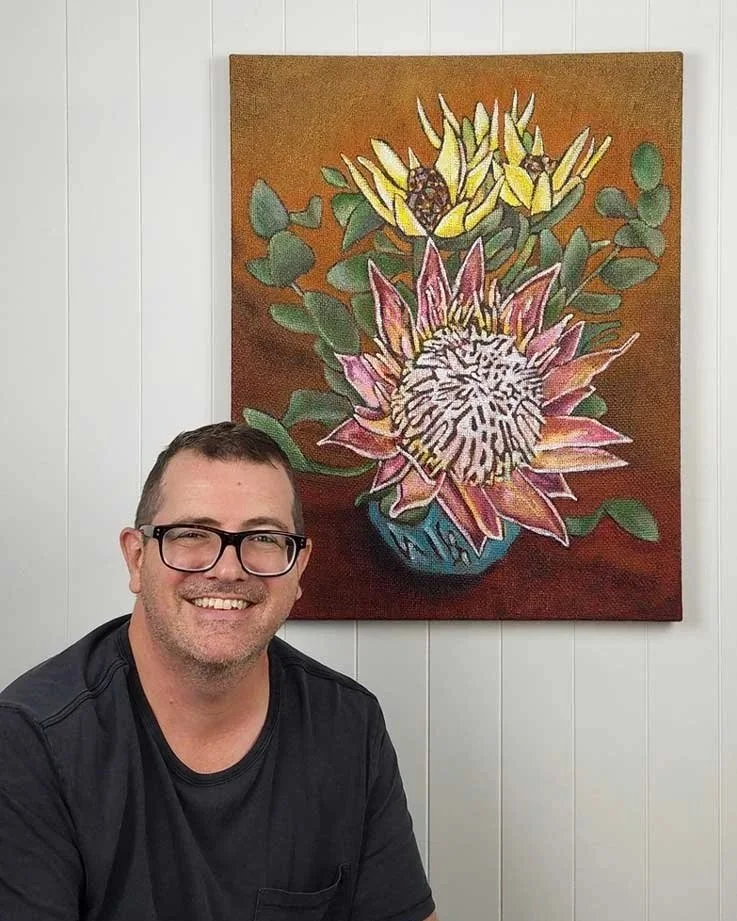
Shaun Weston is a visual artist based on Gubbi Gubbi Country / Redcliffe Peninsula, whose practice centres on memory, material and the idea of home. Working across painting and drawing, he creates tactile surfaces using vintage fabrics and found materials that explore the interplay between comfort, vulnerability and transformation.
Shaun holds a Bachelor of Arts (Visual Arts) from Queensland University of Technology, along with qualifications in graphic design. His background in both disciplines informs a visually considered practice that balances intuitive process with refined composition.
His work has been recognised through selection in several national art prizes, including the Marie Ellis OAM Drawing Prize and The Gold Coast Art Prize. His pieces are held in public collections such as the Gold Coast University Hospital and Toowoomba Regional Gallery, as well as in private collections across Australia.
Shaun’s practice is shaped by a sensitivity to texture and collective memory. Through the reuse of domestic materials, including upholstery fabrics, chenille bedspreads and vintage wallpaper, he builds works that invite close inspection, holding space for the sensory traces of lived experience.
Ink drawings form an integral part of his process, often created through a ritual of surrender and repetition, with select pieces becoming resolved works or forming parts of larger compositions.
For a deeper dive, read the below artist statement.
Home is something we move away from, long for, inhabit and remake. I constantly return to the idea of home - not just as a physical place, but as a shifting psychological space. Shaped by personal and collective memory, materiality and sensual experience are central to my practice.
Artist Statement
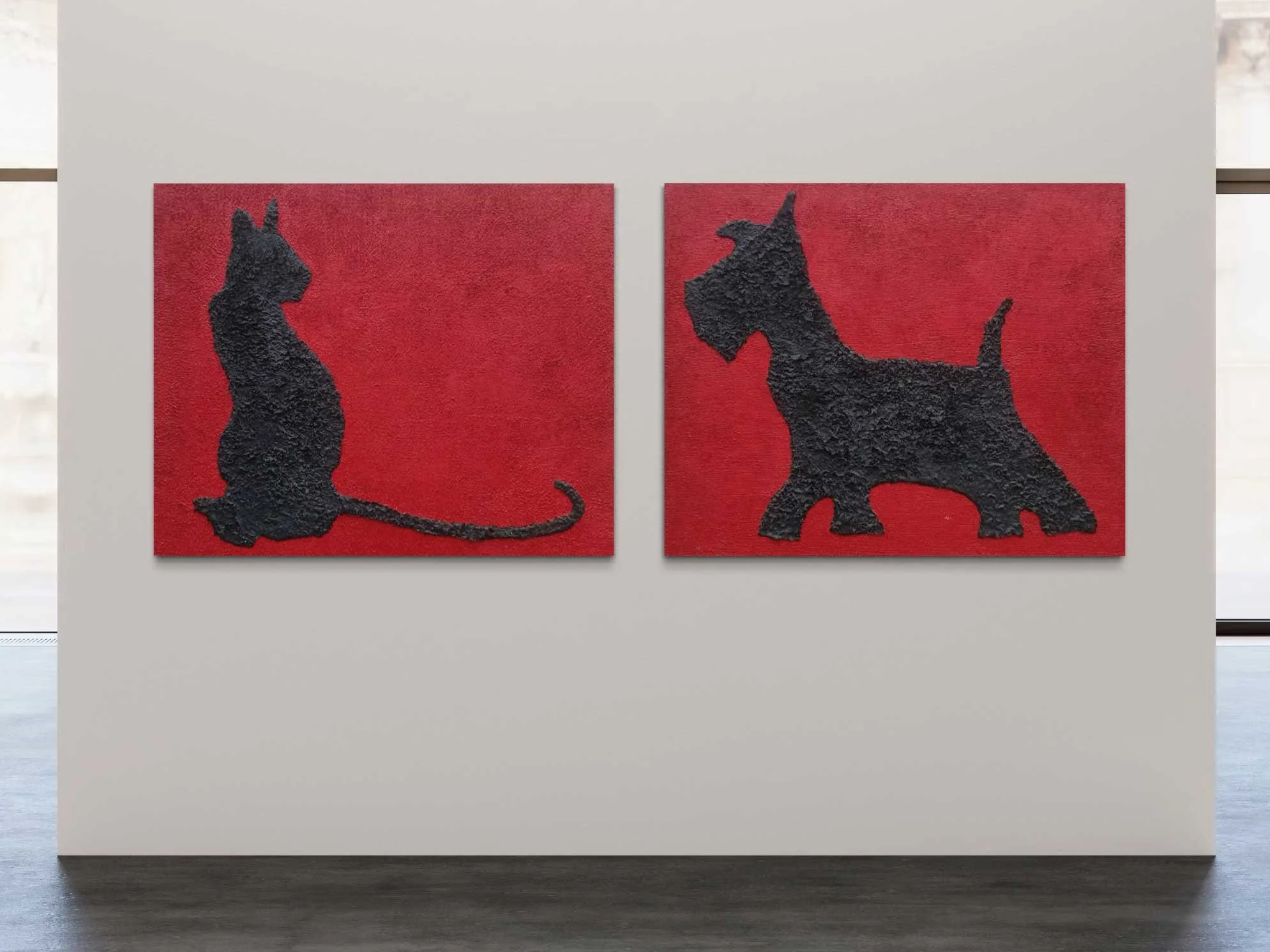
Following only a strong desire to bring to life what was in my head, I used to make with little considerations as to why. Early works, including large scale paintings of dogs and cats on bedding, years later revealed themselves as coded narratives of childhood trauma. Now conscious of this, my work doesn’t attempt to explain it. Instead, it makes space for what cannot be fully spoken, held within the familiar language of the body, flowers and domestic objects.
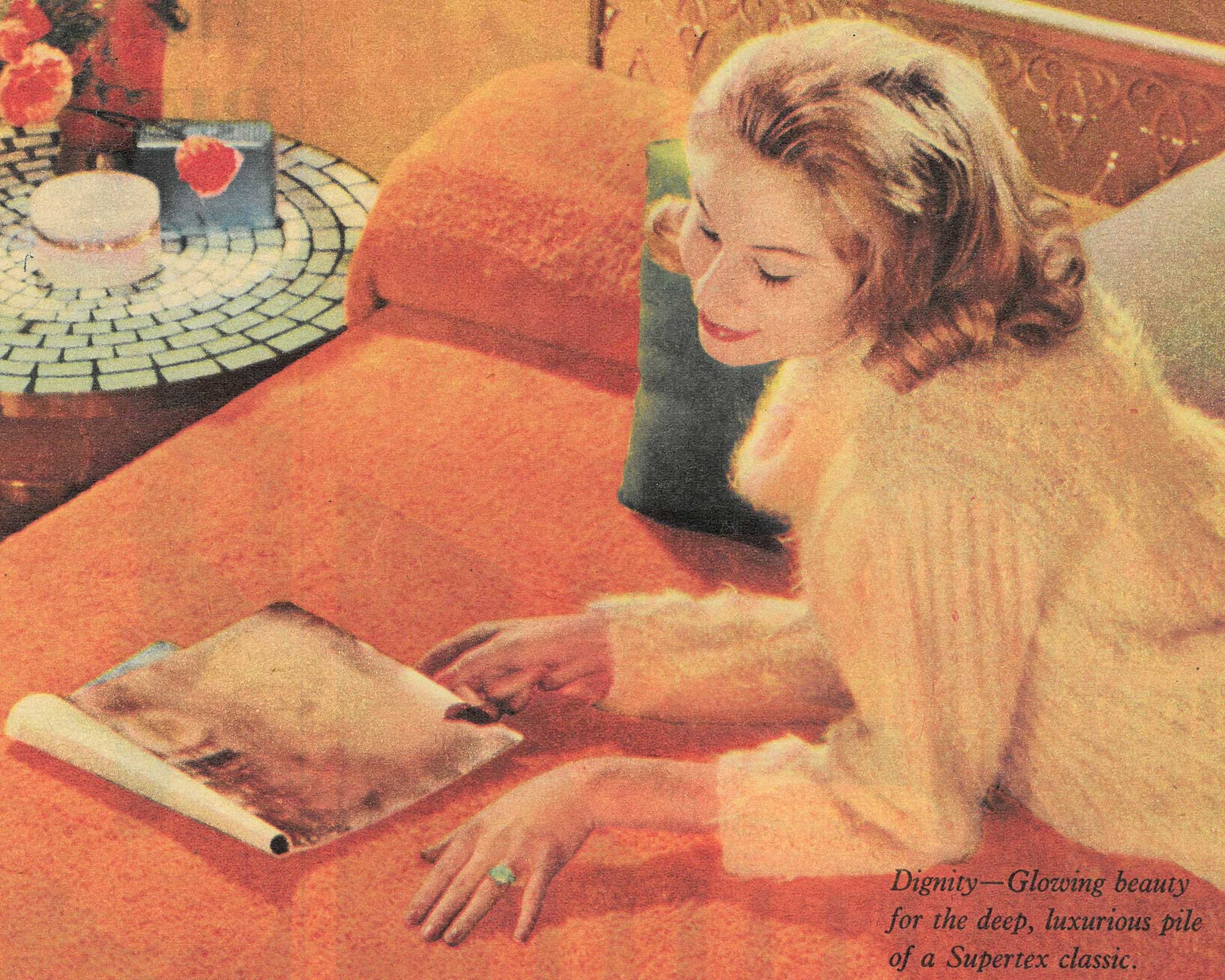
My hands sweeping across the tufts of chenille bedspreads, my fingers tracing the outlines of floral wallpaper - these comforting memories are woven into the materials I work with. Vintage bedspreads and wallpapers, decades-old upholstery fabrics purchased on clearance, cardboard and newspaper are my canvas. I’m drawn to materials that exist in a liminal space between the precious and the disposable. Working with these materials lets me speak to survival in a way that’s quiet but deliberate.
The surfaces I build are about contradiction. I take soft, familiar fabrics like chenille and heavily encrust them with paint, turning them into something hard and prickly. This transformation becomes both an act of self-protection and a gesture of control, allowing me to reframe vulnerability through tactile processes. What appears lush and inviting might instead reveal itself to be sharp and resistant.
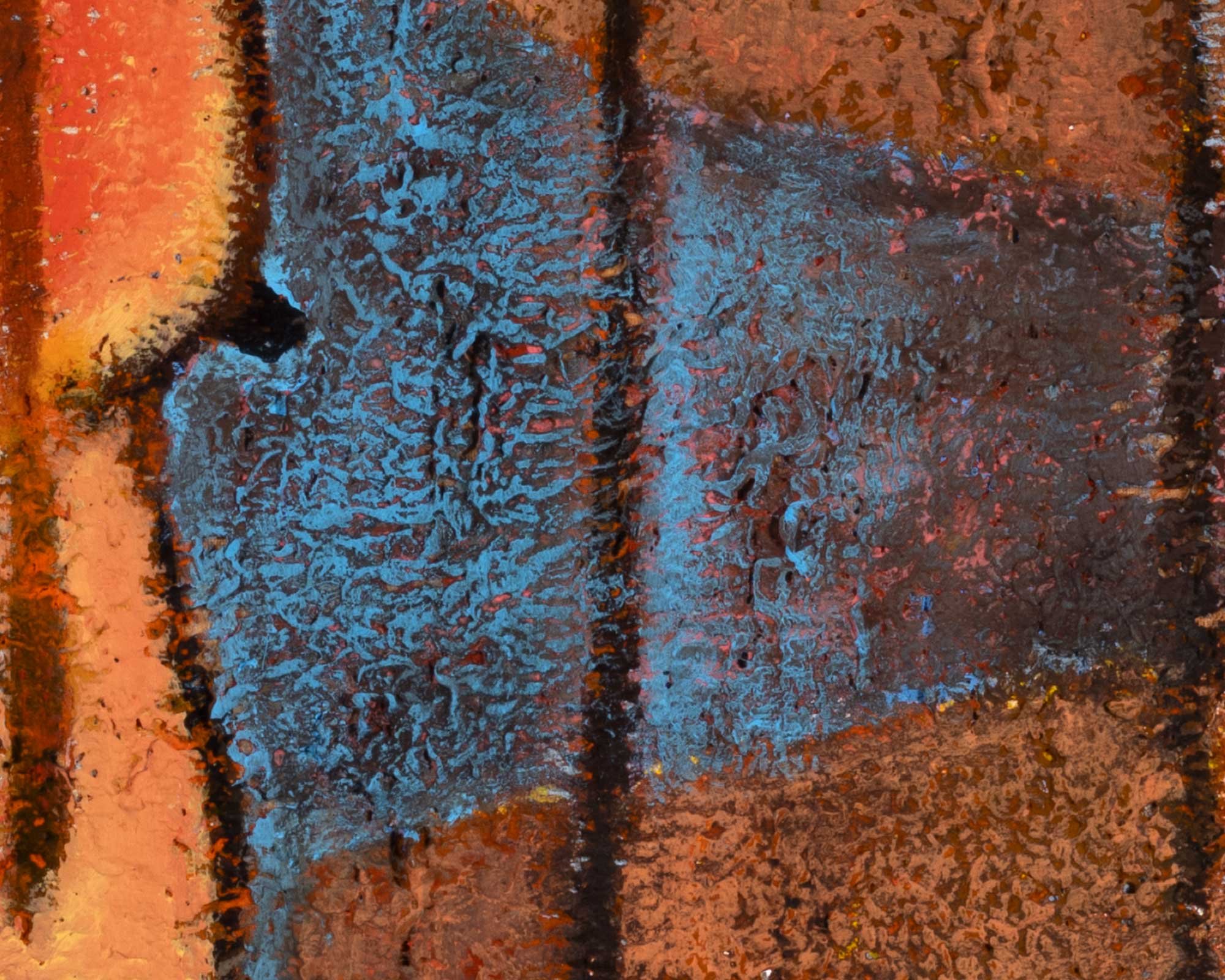
Touch is an important undercurrent in my work, with a negotiation of permission built into many of my painted surfaces. People often want to touch, which is followed by a moment of hesitation - they either ask or simply touch. In that pause, a subtle boundary becomes visible, one that is either respected or crossed.
Ink drawing is a different kind of ritual, one of surrender. I work upright, letting gravity take hold as I draw with a dropper directly from the bottle. Ink runs down the wall onto my feet and the floor. It’s a physical process of letting go and then control. Life is messy, and so is this process. I repeat drawings, many are discarded, others are filed away. Some become resolved works on paper, others provide the composition for larger paintings, their components hidden and transformed. My drawing practice is layered and selectively revealed.
Through transformation, I find possibility. My work doesn’t offer simple narratives of healing or disclosure. It holds space for the messy, layered process of making meaning from experience. It embraces contradiction, it doesn’t reveal everything at once. Like memory, like home, it shifts.